
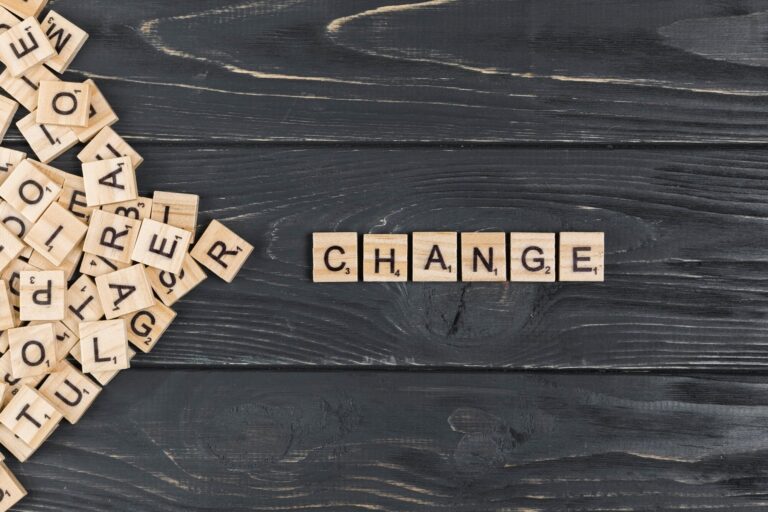
Life does not ask our permission before it changes us. Loss arrives. Relationships end. Careers shift. Health fluctuates. People we love leave or are taken. The world we knew becomes unrecognizable. This is not a malfunction. This is life doing exactly what it has always done.
And we are built for it.
Neuroscience has confirmed what the great wisdom traditions have always known. The brain remains plastic and reorganizing throughout the entire lifespan, forming new neural connections in response to experience, challenge, loss, learning and love. We are not rigid structures that peak in early adulthood and slowly decline. We are dynamic, adaptive, living systems designed to meet change and be strengthened by it. Every difficult experience carries within it the raw material for greater wisdom, deeper perception and more authentic selfhood. This is not philosophy. It is biology.
The question is never whether life will change us. It will. The question is whether we will meet that change consciously, with courage and curiosity, or whether we will spend our energy resisting what is already happening.
Rumi, the 13th century Sufi mystic and poet, understood this long before brain imaging existed. He wrote: yesterday I was clever, so I wanted to change the world. Today I am wise, so I am changing myself. Real transformation begins within. Not with the world, not with other people, not with circumstances. With the self. Always with the self.
Buddhism teaches something similar. Impermanence, the constant flux of all things, is not a problem to be solved. It is one of the fundamental marks of existence. To resist change is to resist the nature of reality itself. The suffering that comes from clinging, from demanding that life stay as it was, from refusing to allow experience to alter us, is not forced upon us from outside. It is self-created.
And the Stoics were equally clear. Seneca observed that we suffer more in imagination than in reality. The fear of what change might bring costs us more than the change itself almost ever does.
So why do so many people never change?
Not because life has failed to offer them moments of disruption and invitation. But because the inner work is genuinely hard. It asks us to look honestly at what is actually there. To sit with the shadow, the discomfort, the parts that do not fit the story we have been telling about ourselves. And many of us, understandably, cower in the face of that. Not toward the world. Toward ourselves.
And so we wear masks. Adopt personas. Perform togetherness and competence and certainty. We fit in, do not rock the boat, meet the expectations of whatever role we have accepted for ourselves. And it works, on the surface. But it drains something essential. Every mask requires maintenance. Every performance requires energy. And that energy, the psychic and emotional energy spent on not being fully yourself, is energy stolen from creativity, discovery, genuine connection and growth.
There is the particular weight of unresolved anger and old grievances. People who carry long held grudges, who replay old wounds, who remain defined by what was done to them, are not simply difficult or bitter. Research now suggests that people who hold grudges are not primarily angry. They are grieving.
And that grief is broader than we typically acknowledge. It is not only the loss of a person. It is the loss of a relationship as we understood it. The loss of a role we inhabited. A version of ourselves we believed in. A future we had counted on. Even the loss of a situation, a career, a community, a sense of safety we once felt and no longer do. Any attachment that is disrupted without being resolved leaves its mark.
From the perspective of Polyvagal Theory, developed by Dr. Stephen Porges, grief and unresolved loss are not only emotional experiences. They are physiological ones. The nervous system perceives the loss of what made us feel safe as a form of threat. Neuroception, the body’s unconscious scanning system for safety and danger, becomes dysregulated. It begins to read neutral situations as threatening. Safe relationships as potentially dangerous. The present moment through the lens of a past wound. And so the person who never processed the loss, never did the inner work, finds themselves caught in survival patterns, fight, flight or freeze, that were designed for genuine danger but are now triggered by echoes of something that happened long ago.
This is not weakness. It is biology. The nervous system trying to protect us by keeping us alert to a threat that no longer exists in the same form. But without awareness and without the willingness to turn toward that unresolved grief, those patterns become the architecture of a life that cannot fully open.
And from that settling, however gradual, something opens. You move from being carried by change to choosing it. And in that choosing, you discover the person you were always becoming.
There is also a cost that rarely gets named. Those who do not do their inner work gradually lose the ability to see themselves clearly. They become, in a sense, a black box to themselves. Unable to make accurate assessments of their own motivations, their patterns, their triggers, their needs. And because they cannot see themselves clearly, they cannot see their relationships clearly either. They misread situations. They project. They react from places they have never examined. The inner landscape remains unmapped, and so they navigate by guesswork, wondering why the same patterns keep appearing in different forms, in different relationships, in different chapters of their lives.
The human being who allows life to fully change them, who drinks in the painful and the joyful and the frustrating and the fulfilling with equal willingness to learn, becomes something naturally multidimensional. Perceptive. Insightful. Wise. Connected. Balanced. Authentic. Not because they sought those qualities directly, but because they had the courage to keep meeting themselves honestly across the full arc of their experience.
That is what the great traditions point toward. Not a fixed destination but an ongoing willingness. A practice of turning toward rather than away. Of asking what this experience is trying to teach rather than how to make it stop. Of allowing the self to be genuinely altered by what life brings, knowing that what is altered is not lost but deepened.
And here is what those who have walked this path discover. The call to authenticity does not arrive once and then fall silent. It returns. Again and again, in new forms, in new chapters, asking more of you each time. But something shifts with each courageous choice. The lived experience of having shown up honestly and survived it, of having removed a mask and found yourself still standing, of having told the truth and found it brought you closer rather than further from what matters, that experience becomes its own kind of evidence. Choosing courage gets easier over time. Not because the inner work becomes less demanding but because you have accumulated proof that you can do it. That it is worth it. That the version of yourself waiting on the other side of the honest choice is someone worth meeting.
Life will change you whether you consent to it or not. The only real question is whether you will bring curiosity and courage to that process, or spend your precious energy resisting what is already happening.
The work of becoming more fully yourself is never finished. And that is not a burden. That is the whole beautiful, difficult, worthwhile point.

1 comment
177520940
Test